Tax Deductions Basics Australia 2025
Learn what work-related expenses you can claim, how deductions reduce your tax, and the records you need to keep.
IntuitiveCalc Team
Financial Content Specialist
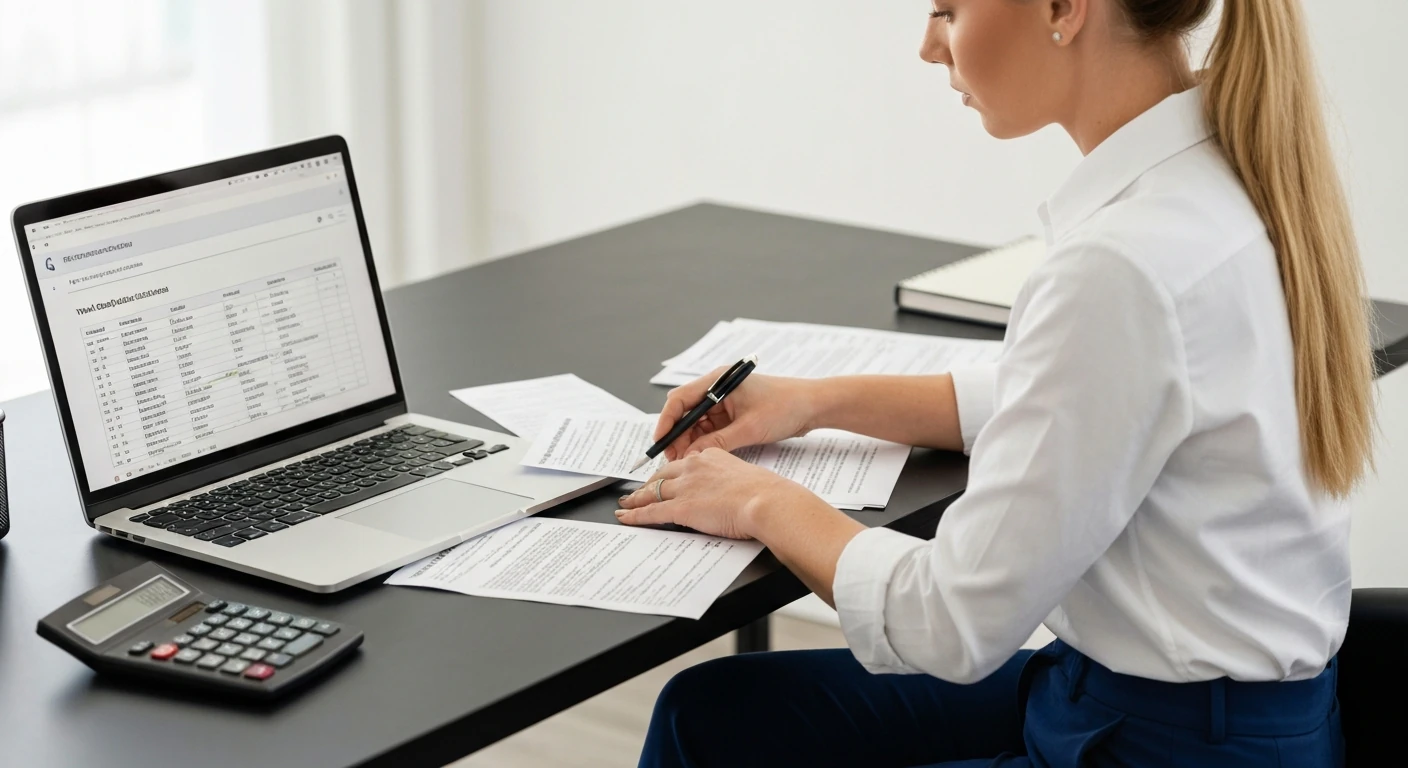
Tax deductions reduce your taxable income, which means you pay less tax. Understanding what you can claim is the key to maximising your tax refund - legally.
How Deductions Work
A deduction reduces your taxable income - it's not a dollar-for-dollar refund.
- • Claim $1,000 in deductions at 32.5% tax rate
- • Your tax is reduced by $325
- • Your refund increases by $325
Table of Contents
The 3 Golden Rules of Tax Deductions
For any expense to be tax deductible, it must meet all three of these conditions:
Work Related
The expense must be directly related to earning your income
You Paid For It
You personally spent the money and weren't reimbursed
You Have Records
You can prove the expense with receipts or other documentation
The $300 Rule
You can claim up to $300 total in work-related expenses without receipts. But you still need to have actually spent the money, and it must be genuinely work-related. Above $300 in any category, you need receipts.
Work-Related Deductions
The most common deductions are for expenses you incur as part of your job:
Tools and Equipment
| Item Cost | How to Claim |
|---|---|
| $300 or less | Claim the full amount immediately |
| Over $300 | Depreciate over the item's effective life |
Examples of Claimable Tools
- Laptop or computer (work use percentage)
- Mobile phone (work use percentage)
- Specialised software
- Trade tools and equipment
- Briefcases and bags used for work
Phone and Internet
You can claim the work-related percentage of your phone and internet bills.
Calculating Work Use
Keep a 4-week diary tracking work vs personal use, then apply that percentage to your bills for the year.
Example: Phone bill $100/month, 30% work use = $30/month deductible = $360/year
Union Fees and Professional Memberships
- Union membership fees - 100% deductible
- Professional association fees (if required for work)
- Registration fees for licensed occupations
- Working with children check fees
Working From Home Deductions
If you work from home, you can claim a portion of your home office expenses. There are two methods:
Method 1: Fixed Rate (Recommended for Most)
67 cents per hour worked from home
This covers:
- • Energy expenses (electricity and gas)
- • Phone and internet
- • Computer consumables
- • Stationery
You need: A record of actual hours worked from home (time sheets, diary, roster)
Fixed Rate Example
- Work from home 3 days/week = ~15 hours/week
- 48 working weeks per year = 720 hours
- 720 hours x $0.67 = $482.40 deduction
Method 2: Actual Expenses
Calculate the actual costs and work-related percentage. More complex but may give higher deductions.
- Calculate work use percentage of your home (square metres)
- Apply that percentage to electricity, internet, etc.
- Requires detailed records and calculations
- Cannot double-dip (e.g., claim phone separately if using fixed rate)
Office Equipment
Items like desks, chairs, and monitors are claimable separately under both methods:
- Under $300: Claim full amount in the year of purchase
- Over $300: Depreciate over the item's effective life
- Work use percentage applies if also used personally
Car and Travel Deductions
Important: Home to Work is NOT Deductible
Travelling from home to your regular workplace and back is private, not work-related. You cannot claim this commute.
When Car Travel IS Claimable
- Travel between two different workplaces
- Travel to meet clients or attend meetings
- Carrying bulky tools you can't store at work
- Required to start work at different locations each day
- On-call travel from home to work site
Cents Per Kilometre Method
85 cents per kilometre (2024-25)
This method is simple and covers all car running costs:
- • Maximum 5,000 km per year
- • Maximum claim: 5,000 x $0.85 = $4,250
- • Need to be able to show how you calculated km
- • Keep a reasonable record (diary, log)
Logbook Method
For claiming more than 5,000 km or if actual costs are higher:
- Keep a logbook for a continuous 12-week period
- Record every trip (date, km, purpose)
- Calculate work use percentage
- Apply percentage to actual car costs (fuel, rego, insurance, repairs)
- Logbook valid for 5 years (if circumstances don't change)
Uniforms and Clothing
What You CAN Claim
- Compulsory uniforms - Required by your employer, with company logo
- Protective clothing - Steel-cap boots, high-vis, safety glasses
- Occupation-specific clothing - Chef whites, nurse scrubs, theatrical costumes
- Registered logos - Uniform registered with AusIndustry
What You CANNOT Claim
- Conventional clothing (even if only worn for work)
- Plain black pants/white shirts for dress codes
- Suits, dresses, shoes (unless protective)
- Clothing you could wear outside work
Laundry and Dry Cleaning
Laundry Claim
- • $1 per load if only work clothing
- • $0.50 per load if mixed with personal items
- • No receipts needed under $150 total
- • Dry cleaning requires receipts
Self-Education Expenses
You can claim self-education if it's directly related to your current job and either:
- Maintains or improves skills for your current work, OR
- Is likely to increase your income from current employment
Claimable Self-Education Costs
- Course fees and textbooks
- Stationery and equipment
- Travel to attend classes
- Home office expenses while studying
- Internet for online courses
What's NOT Claimable
Study that leads to a new career or promotion to a different role is not deductible. For example, a nurse can't claim costs for a law degree, but can claim costs for advanced nursing qualifications.
What You Cannot Claim
These common expenses are NOT tax deductible:
Never Deductible
- x Home to work travel (commuting)
- x Childcare and school fees
- x Conventional clothing
- x Private health insurance premiums
- x Meals at work (normal circumstances)
- x Parking at work
Only Partially/Sometimes Deductible
- ! Phone (work percentage only)
- ! Internet (work percentage only)
- ! Computer (work percentage only)
- ! Travel with private component
- ! Entertainment (limited circumstances)
Record Keeping Requirements
The ATO can audit your tax return and ask for proof of deductions. Keep records for 5 years from the date you lodge.
What to Keep
- Receipts - For all purchases over $300 (per category)
- Bank statements - Showing the payment was made
- Logbooks - For car or home office use
- Diaries - Recording work use of phone, internet, etc.
- Invoices - From service providers
The myDeductions App
Free ATO App
Download the ATO's myDeductions app to:
- • Photo and store receipts
- • Track car trips
- • Record work-related expenses
- • Export directly to your tax return
Audit Risk
The ATO uses data matching to identify unusual claims. If your deductions are significantly higher than others in your occupation and income bracket, you may be selected for review. Always claim only what you're entitled to and can prove.
Related Calculators & Resources
Income Tax Calculator
See how deductions affect your tax.
First Tax Return Guide
Step-by-step guide to lodging.
WFH Deductions Guide
Detailed working from home claims.
Deductions by Profession
Industry-specific deduction guides.
Key Takeaways
- ✓ Deductions must be work-related, paid by you, and have records
- ✓ Working from home: claim 67 cents per hour (fixed rate method)
- ✓ Car travel: 85 cents per km (max 5,000 km) or logbook method
- ✓ Home to work commuting is NOT deductible
- ✓ Keep receipts for 5 years - use the myDeductions app
- ✓ Only claim what you actually spent and can prove
Disclaimer: This guide provides general information about tax deductions in Australia for the 2024-25 financial year. Deduction rules can be complex and depend on individual circumstances. For specific advice, consult a registered tax agent or the Australian Taxation Office. This content is for informational purposes only and should not be considered tax advice.