Solar Panel Maintenance Guide: Keep Your System Running at Peak Performance
IntuitiveCalc Team
Financial Content Specialist
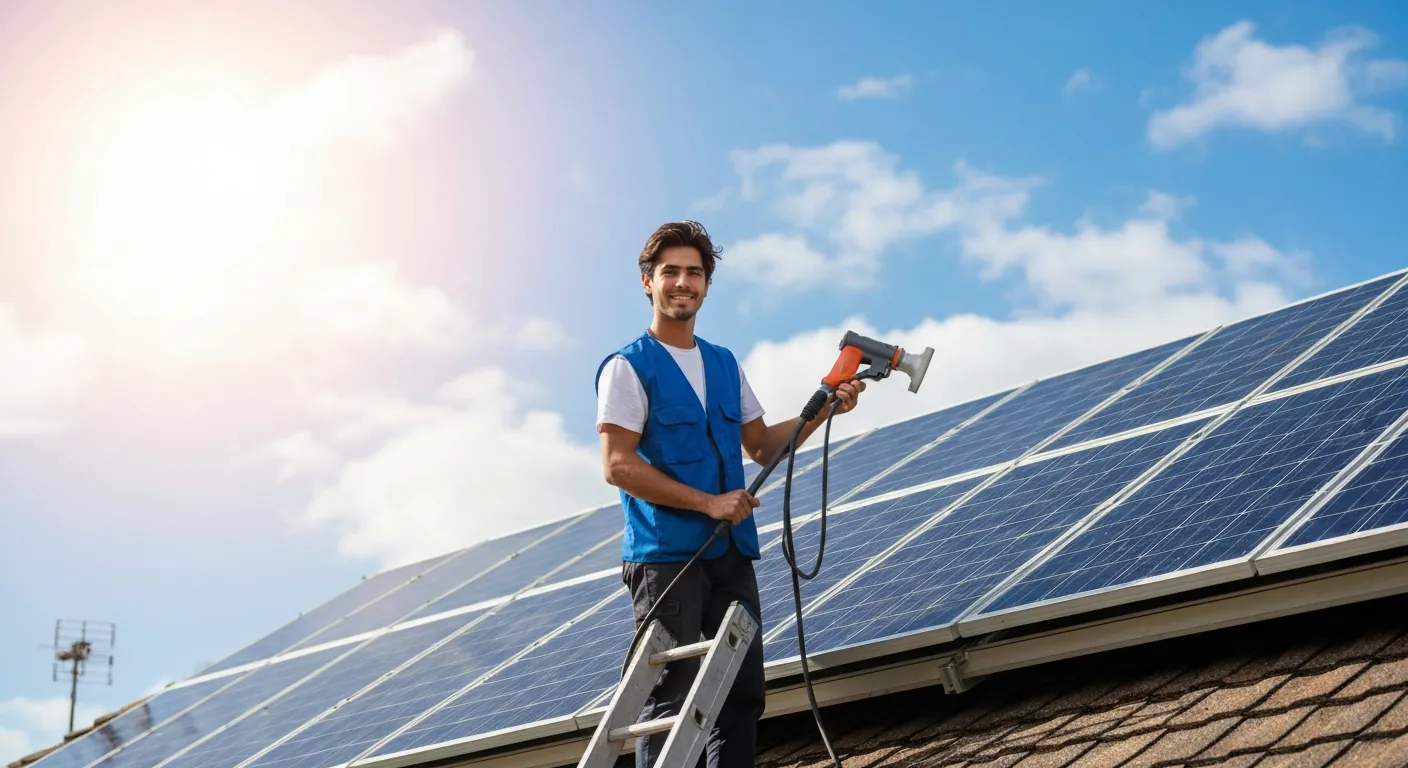
Solar panels are designed to be low-maintenance, but regular care ensures they operate at peak efficiency for 25+ years. Dirty or poorly maintained panels can lose 15-25% of their output. This guide shows you exactly how to maintain your Australian solar system for maximum ROI.
The Cost of Poor Maintenance
For a typical 6.6kW system in Sydney:
- • Clean panels: ~7,200 kWh/year = $1,800 savings
- • Dirty panels (20% loss): ~5,760 kWh/year = $1,440 savings
- • Annual loss from dirt: $360
- • Over 25 years: $9,000 in lost savings
Solar Panel Cleaning: The Ultimate Guide
When to Clean Your Solar Panels
Australian solar panels need cleaning based on your location and environment:
Recommended Cleaning Schedule by Location
| Environment | Cleaning Frequency | Reason |
|---|---|---|
| Coastal Areas | Every 3 months | Salt spray, sea mist |
| Urban/Suburban | Every 6 months | Dust, pollution, bird droppings |
| Rural/Farmland | Every 3-4 months | Crop dust, pollen, farming activity |
| Near Trees | Every 3 months | Leaf litter, bird droppings, sap |
| Dusty/Dry Areas | Every 2-3 months | Dust storms, dry conditions |
DIY Solar Panel Cleaning: Step-by-Step
What You'll Need:
- • Soft-bristle brush or solar panel cleaning brush
- • Garden hose with spray nozzle
- • Squeegee with extension pole
- • Mild, eco-friendly detergent (if needed)
- • Bucket of water
- • Safety harness and non-slip shoes (for roof work)
Step 1: Safety First
- Clean panels early morning or late afternoon (never in direct hot sun)
- Turn off your solar system at the isolator switch
- Use proper safety equipment if accessing the roof
- Consider professional cleaning for steep or high roofs
Step 2: Remove Loose Debris
- Gently brush off leaves, twigs, and loose dirt
- Use a soft-bristle brush to avoid scratching
- Work from top to bottom of each panel
Step 3: Rinse with Water
- Use garden hose with gentle spray (not high pressure)
- Rinse entire panel surface thoroughly
- Let water run off naturally for initial dirt removal
Step 4: Wash (If Needed)
- Mix small amount of mild detergent in bucket
- Gently scrub panels with soft brush
- Pay attention to corners and edges where dirt accumulates
- Avoid abrasive cleaners, harsh chemicals, or high-pressure washers
Step 5: Final Rinse and Dry
- Rinse thoroughly to remove all detergent
- Use squeegee to remove excess water
- Allow to air dry completely before turning system back on
⚠️ Never Do This:
- • Don't use high-pressure washers (can damage cells)
- • Don't clean in direct hot sunlight (thermal shock risk)
- • Don't use abrasive materials or hard brushes
- • Don't use harsh chemicals or detergents
- • Don't walk on panels
- • Don't spray cold water on hot panels
Professional Cleaning vs DIY
DIY Cleaning
Cost: $0-50
Pros:
- ✓ Free or low cost
- ✓ Can do anytime
- ✓ Good for accessible panels
Cons:
- ✗ Safety risk on steep roofs
- ✗ May miss hard-to-reach areas
- ✗ Time-consuming
Professional Cleaning
Cost: $150-350
Pros:
- ✓ Fully insured and safe
- ✓ Professional equipment
- ✓ Thorough cleaning
- ✓ Can spot issues early
Cons:
- ✗ Ongoing cost
- ✗ Need to schedule appointments
Solar System Inspection and Monitoring
Monthly Checks (5 minutes)
- Check Your Monitoring App: Review daily generation and compare to previous months
- Look for Obvious Issues: Bird nests, shading from new tree growth, visible damage
- Inverter Light Check: Green light = good, red/orange = problem
- Meter Reading: Verify solar generation matches inverter display
Quarterly Inspections (30 minutes)
- Visual Panel Inspection:
- Check for cracks, discoloration, or hot spots
- Look for loose or damaged cables
- Inspect mounting brackets for rust or looseness
- Shade Analysis:
- Note any new shading sources
- Trim overhanging branches if needed
- Consider seasonal shade changes
- Performance Review:
- Compare generation to system's expected output
- Check for underperforming strings or panels
- Review energy consumption patterns
Annual Professional Inspection
Have a licensed solar electrician perform comprehensive inspection:
- Electrical connections and wiring
- Inverter performance and error logs
- Panel condition and output testing
- Mounting system structural integrity
- Isolator and safety switch functionality
- DC and AC voltage testing
Annual Inspection Cost vs Value
| Professional Inspection Cost: | $150-250 |
| Potential Issues Detected: | Early fault detection |
| Cost of Major Fault (if missed): | $500-3,000+ |
| Value of Prevention: | $1,000-5,000 |
Common Solar Panel Issues and Solutions
Issue 1: Reduced Output
Symptoms: Lower than expected generation, sudden drop in production
Causes:
- Dirt and debris buildup
- Shading from new obstructions
- Panel degradation (normal over time)
- Inverter issues
- Faulty panel or connection
Solutions:
- Clean panels thoroughly
- Identify and remove shade sources
- Check inverter error codes
- Have electrician test individual panels
Issue 2: Inverter Errors
Symptoms: Red/orange lights, error messages, no generation
Common Errors:
- Grid fault (voltage/frequency issues)
- Isolation fault (moisture or damage)
- Temperature issues (overheating)
- Communication errors
Solutions:
- Reset inverter (turn off, wait 5 min, turn on)
- Check display for specific error code
- Ensure inverter has proper ventilation
- Contact installer or electrician if error persists
Issue 3: Physical Damage
Symptoms: Visible cracks, hot spots, discoloration
Causes:
- Hail damage
- Fallen branches or debris
- Manufacturing defects
- Thermal stress
Solutions:
- Document damage with photos
- Check warranty coverage
- Contact installer immediately
- File insurance claim if applicable
- Have damaged panels replaced promptly
Maximizing Solar Panel Lifespan
1. Keep Them Clean
As discussed, regular cleaning maintains efficiency and prevents buildup damage.
2. Monitor Performance Daily
Use your monitoring app to catch issues early:
- Set up performance alerts
- Compare daily generation to weather forecasts
- Track month-over-month trends
- Note any sudden changes immediately
3. Maintain Proper Ventilation
- Ensure airflow under panels (prevents overheating)
- Keep inverter in well-ventilated area
- Don't block ventilation slots
- Consider shade for inverter in hot areas
4. Trim Nearby Vegetation
- Keep trees trimmed back from panels
- Remove overhanging branches
- Prevent birds from nesting under panels
- Install bird proofing if needed
5. Upgrade When Necessary
- Replace aging inverter (typically 10-15 year lifespan)
- Update monitoring systems
- Add optimizers if shading becomes an issue
- Consider battery storage integration
Expected Lifespans of Solar Components
| Component | Typical Lifespan | Warranty |
|---|---|---|
| Solar Panels | 25-30 years | 25 year performance |
| Inverter (String) | 10-15 years | 5-10 years |
| Microinverters | 20-25 years | 10-25 years |
| Mounting System | 25-30 years | 10-25 years |
| Monitoring System | 10-15 years | 1-5 years |
Warranty and Insurance
Understanding Your Solar Warranties
1. Panel Performance Warranty (25 years typical)
- Guarantees minimum power output over time
- Typically 90% output after 10 years, 80% after 25 years
- Covers manufacturing defects
2. Inverter Warranty (5-10 years typical)
- Covers parts and labor for defects
- Often extendable to 15-20 years for additional cost
- May not cover labor costs after initial period
3. Installation Warranty (5-10 years typical)
- Covers workmanship and installation issues
- Includes roof penetrations and waterproofing
- Provided by installer, not manufacturer
Home Insurance and Solar Panels
- Most policies automatically cover solar as "fixtures"
- Inform your insurer of installation value
- Ensure coverage includes storm and hail damage
- Consider increased coverage for premium systems
- Document system with photos for claims
Maintenance Cost Summary
Annual Maintenance Budget (6.6kW System)
| Maintenance Task | Frequency | Cost |
|---|---|---|
| DIY Cleaning | Quarterly | $50/year |
| OR Professional Cleaning | Bi-annual | $400/year |
| Annual Inspection | Yearly | $200 |
| Monitoring System | Ongoing | $0-50/year |
| Inverter Replacement Fund | Save for Year 10-15 | $100-150/year |
| Total Annual Cost (DIY) | $350-450 | |
| Total Annual Cost (Professional) | $700-800 |
Compare to annual savings of $1,500-2,500 - maintenance is only 15-30% of your solar benefits!
Key Takeaways
- • Clean panels every 3-6 months depending on environment
- • Dirty panels can lose 15-25% efficiency ($360/year for typical system)
- • Monitor daily generation to catch issues early
- • Annual professional inspection prevents costly repairs
- • Budget $350-800/year for maintenance (15-30% of savings)
- • Inverters need replacement every 10-15 years ($2,000-3,000)
- • Proper maintenance ensures 25-30 year panel lifespan
- • Always use safety equipment when accessing roof