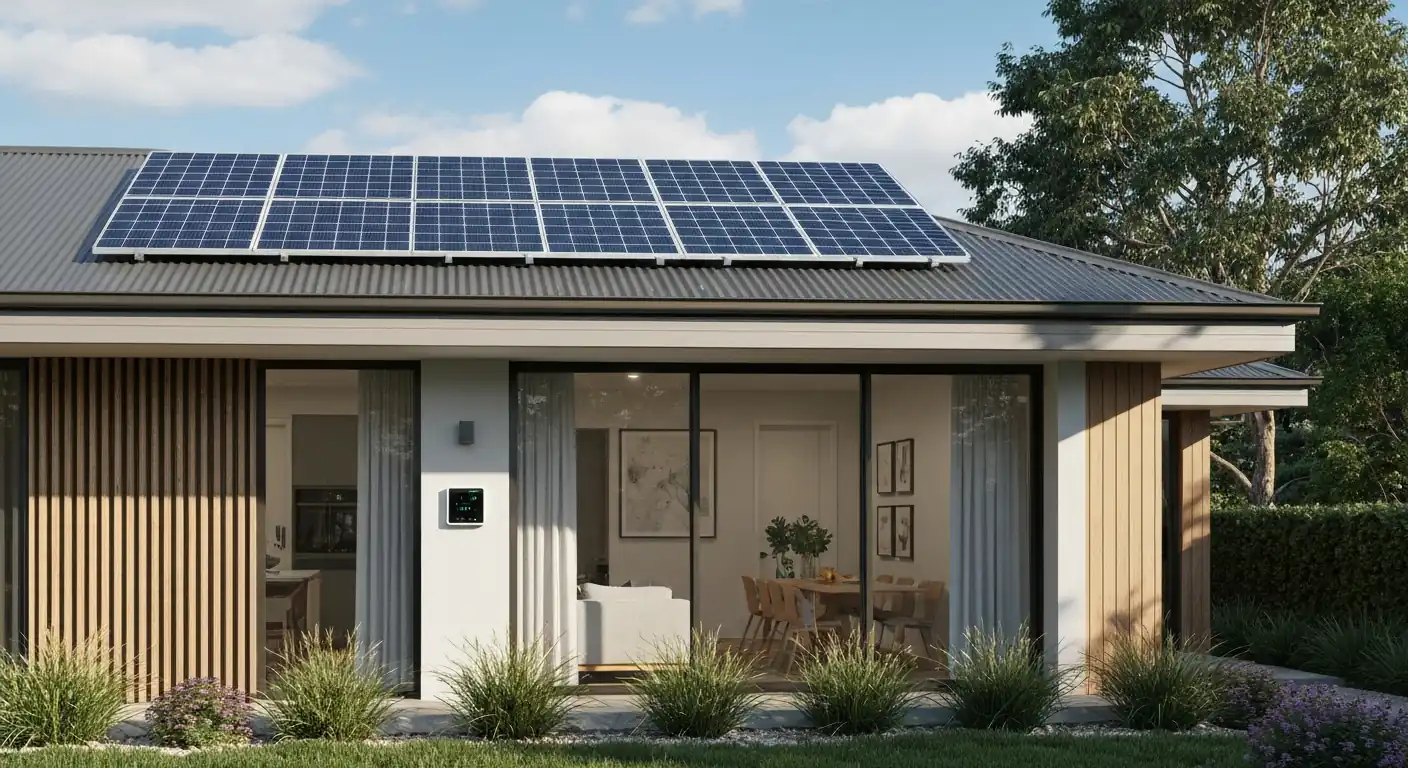
How to Reduce Energy Bills in 2025
Practical strategies to cut your power costs by $500-$2,000 per year
In This Guide
Australian households spend an average of $1,800-$2,400 per year on electricity and gas. With energy prices still elevated after recent increases, reducing your bills has never been more important. This guide covers everything from comparing plans and claiming rebates to simple behaviour changes that can save hundreds of dollars annually—without sacrificing comfort.
Potential Savings Summary
- Switching energy plans: $200-$600/year
- Claiming rebates: $150-$500/year
- Heating/cooling efficiency: $150-$400/year
- Hot water optimization: $100-$300/year
- Appliance efficiency: $100-$250/year
- Solar panels (if applicable): $800-$1,800/year
Average Energy Costs by State
Understanding typical energy costs helps you benchmark your bills and identify if you're paying too much. Costs vary significantly by state due to different wholesale prices, network charges, and climate conditions. If your bills are significantly above average, there's likely room for savings.
| State | Avg Electricity/Year | Avg Gas/Year | Reference Price (c/kWh) |
|---|---|---|---|
| NSW | $1,700-$2,200 | $800-$1,200 | 33.13c |
| VIC | $1,500-$2,000 | $1,000-$1,500 | 31.54c |
| QLD | $1,600-$2,100 | N/A (limited gas) | 30.93c |
| SA | $1,900-$2,600 | $900-$1,300 | 39.68c |
| WA | $1,400-$1,900 | $700-$1,000 | N/A (regulated) |
Compare and Switch Plans
Switching energy providers is often the single biggest way to save money on power bills. The difference between the best and worst plans in your area can be $400-$800 per year. Despite this, most Australians stick with their current provider out of inertia, missing out on significant savings.
How to Compare Plans Effectively
1. Use Government Comparison Sites
Energy Made Easy (energymadeeasy.gov.au) - Federal government site showing all available plans. Enter your postcode and bill details to see personalised comparisons based on your actual usage.
2. Check the Reference Price
The "Reference Price" is a government benchmark. Plans advertise discounts off this price (e.g., "10% below reference price"). Always compare annual costs, not percentages.
3. Look Beyond Discounts
Big "discounts" can be off inflated prices. Focus on the total estimated annual cost, which accounts for all rates, fees, and discounts.
4. Consider Time-of-Use Plans
If you can shift usage to off-peak hours (usually 10pm-7am), time-of-use plans offer much cheaper rates during those periods. Best for EV owners, those with solar batteries, or shift workers.
Switching Is Easy
There's no fee to switch retailers, no interruption to supply, and your new retailer handles the transfer. Most switches complete within 2-4 weeks. You can switch as often as you like—many Australians compare plans annually to ensure they're on the best rate.
Government Rebates and Assistance
Every state and territory offers energy rebates and assistance programs, but many eligible Australians don't claim them. These rebates can reduce your bills by $150-$500 per year and are available to concession card holders, low-income households, and sometimes all residents.
Energy Rebates by State
| State | Main Rebate | Amount (Approx) | Eligibility |
|---|---|---|---|
| NSW | Low Income Household Rebate | $285/year | Pensioners, DVA card holders, Family Tax Benefit |
| VIC | Energy Concession | $350/year + $250 Power Saving Bonus | Concession card holders |
| QLD | Electricity Rebate + Asset Ownership Dividend | $372 + $550 | All households (dividend) + concession holders |
| SA | Energy Concession | $270/year | Pensioners, Centrelink recipients |
| WA | Energy Assistance Payment | $400 credit | WA Seniors Card, other concession holders |
How to Claim Rebates
Most rebates need to be claimed through your energy retailer—they should appear automatically on your bill if you've registered. Contact your retailer with your concession card details to ensure you're receiving all entitled rebates. Some states also offer additional one-off payments or top-ups—check your state government website for current offers.
What Uses Most Electricity
To effectively reduce your bills, you need to understand what's actually using power in your home. Heating and cooling, hot water, and refrigeration typically account for 50-70% of household electricity. Targeting these areas delivers the biggest savings.
| Appliance/Use | % of Bill | Annual Cost (Typical) |
|---|---|---|
| Heating & Cooling | 20-40% | $400-$900 |
| Hot Water (electric) | 15-25% | $300-$600 |
| Refrigerator/Freezer | 8-12% | $150-$300 |
| Washer/Dryer | 5-10% | $100-$200 |
| Cooking | 4-8% | $80-$180 |
| Lighting | 5-8% | $100-$180 |
| Electronics & Standby | 5-10% | $100-$200 |
| Pool Pump (if applicable) | 10-15% | $200-$400 |
Heating and Cooling Efficiency
As the biggest energy user in most homes, heating and cooling offers the greatest savings potential. Smart temperature settings and efficient use can cut this cost by 30-50% without sacrificing comfort.
Optimal Temperature Settings
Winter Heating
- Set to 18-20°C: Each degree above 20°C adds ~10% to heating costs
- Use timers: Heat only when home and awake
- Zone heating: Heat only occupied rooms
- Layer up: Wear warm clothes indoors
Summer Cooling
- Set to 24-26°C: Each degree below 24°C adds ~10% to cooling costs
- Use fans first: Fans use 1/10th the energy of AC
- Cool at night: Open windows when cooler outside
- Block heat: Close blinds during hot hours
Savings Example: Temperature Adjustment
Current: Heat set to 24°C, cooling to 20°C
Adjusted: Heat to 20°C, cooling to 25°C
Estimated saving: 30-40% on heating/cooling = $150-$350/year
Hot Water Cost Savings
Hot water is often the second-largest energy cost for households. Whether you have electric, gas, or solar hot water, there are ways to reduce consumption and costs without taking cold showers.
Hot Water Saving Tips
- Lower thermostat: Set to 60°C at the unit (prevents bacteria) but use tempering valve to deliver at 50°C to taps
- Shorter showers: Each minute costs ~5-10 cents; reducing from 10 to 5 minutes saves $100+/year
- Install low-flow showerheads: Use 30-50% less water while maintaining pressure
- Fix dripping hot taps: One drip per second wastes 12,000+ litres per year
- Wash clothes in cold water: Modern detergents work well in cold; saves $50-100/year
- Off-peak heating: If on electric with off-peak tariff, ensure timer is set correctly
Efficient Appliance Use
While individual appliances use less energy than heating or hot water, the cumulative effect of efficient use adds up. Simple changes to how you use everyday appliances can save $100-250 per year.
Refrigerator/Freezer
- Set fridge to 3-4°C and freezer to -15 to -18°C (colder wastes energy)
- Keep door seals clean and check they're sealing properly
- Let hot food cool before putting in fridge
- Keep fridge reasonably full (but not overpacked)—items retain cold
- Ensure good airflow around the unit (10cm clearance)
Washing Machine & Dryer
- Wash full loads only (half loads use similar energy)
- Use cold water cycles when possible
- Line dry instead of tumble drying—saves $100-150/year
- If using dryer, use sensor settings rather than timed
- Clean dryer lint filter after every use
Cooking
- Use lids on pots and pans (reduces cooking time by 25%)
- Match pot size to element size
- Use microwave or air fryer for small meals (more efficient than oven)
- Batch cook to make full use of oven heat
- Turn off oven 5-10 minutes early—residual heat finishes cooking
Solar Panel Investment
For homeowners, solar panels offer the biggest long-term savings on energy bills. With prices continuing to fall and government rebates available, solar systems now typically pay for themselves in 3-5 years, then provide 20+ years of reduced bills.
Solar Economics in 2025
| System Size | Cost (After Rebate) | Annual Savings | Payback Period |
|---|---|---|---|
| 5kW (small home) | $3,500-$5,000 | $1,000-$1,400 | 3-4 years |
| 6.6kW (average home) | $4,500-$6,500 | $1,300-$1,800 | 3-4 years |
| 10kW (large home) | $7,000-$10,000 | $1,800-$2,500 | 3-5 years |
| Battery (13.5kWh) | $10,000-$15,000 | $500-$1,000 extra | 10-15 years |
Solar Rebates Available
- Federal STC rebate: Reduces upfront cost by $2,500-$4,000 (included in quotes)
- State rebates: Additional support in VIC, SA, NSW, QLD for eligible households
- Interest-free loans: Available in some states for solar/battery
Quick Wins (No or Low Cost)
You don't need to spend money to save money. These no-cost and low-cost actions can reduce your bills immediately:
Free Actions
- • Switch off lights when leaving rooms
- • Turn off appliances at the wall (not standby)
- • Close doors to unused rooms
- • Open/close blinds strategically
- • Adjust heating/cooling temperature
- • Take shorter showers
- • Wash clothes in cold water
- • Line dry instead of using dryer
Low Cost ($10-$100)
- • LED light bulbs (~$5-10 each)
- • Low-flow showerhead (~$30)
- • Door seals/draught stoppers (~$20-50)
- • Power boards with switches (~$20)
- • Ceiling fan (cheaper than AC) (~$100)
- • Window film for insulation (~$50)
- • Timer for pool pump (~$50)
Related Tools
Solar ROI Calculator
Calculate your potential savings and payback period for solar panels.
Electricity Cost Calculator
Calculate the running cost of your appliances.
Budget Planner
Track your utility costs and overall household budget.
More Guides
Browse our complete library of money-saving guides.
Key Takeaways
- ✓ Compare plans annually: Switching retailers can save $200-$600/year.
- ✓ Claim rebates: Most states offer $150-$500/year for eligible households.
- ✓ Target big users: Heating, cooling, and hot water are 50%+ of your bill.
- ✓ Adjust temperatures: Each degree saves ~10% on heating/cooling costs.
- ✓ Consider solar: Payback in 3-5 years, then decades of savings.
Disclaimer: This guide provides general information about reducing energy bills in Australia. Actual costs and savings vary based on location, household size, energy usage patterns, and current rates. Visit Energy Made Easy for personalised plan comparisons.