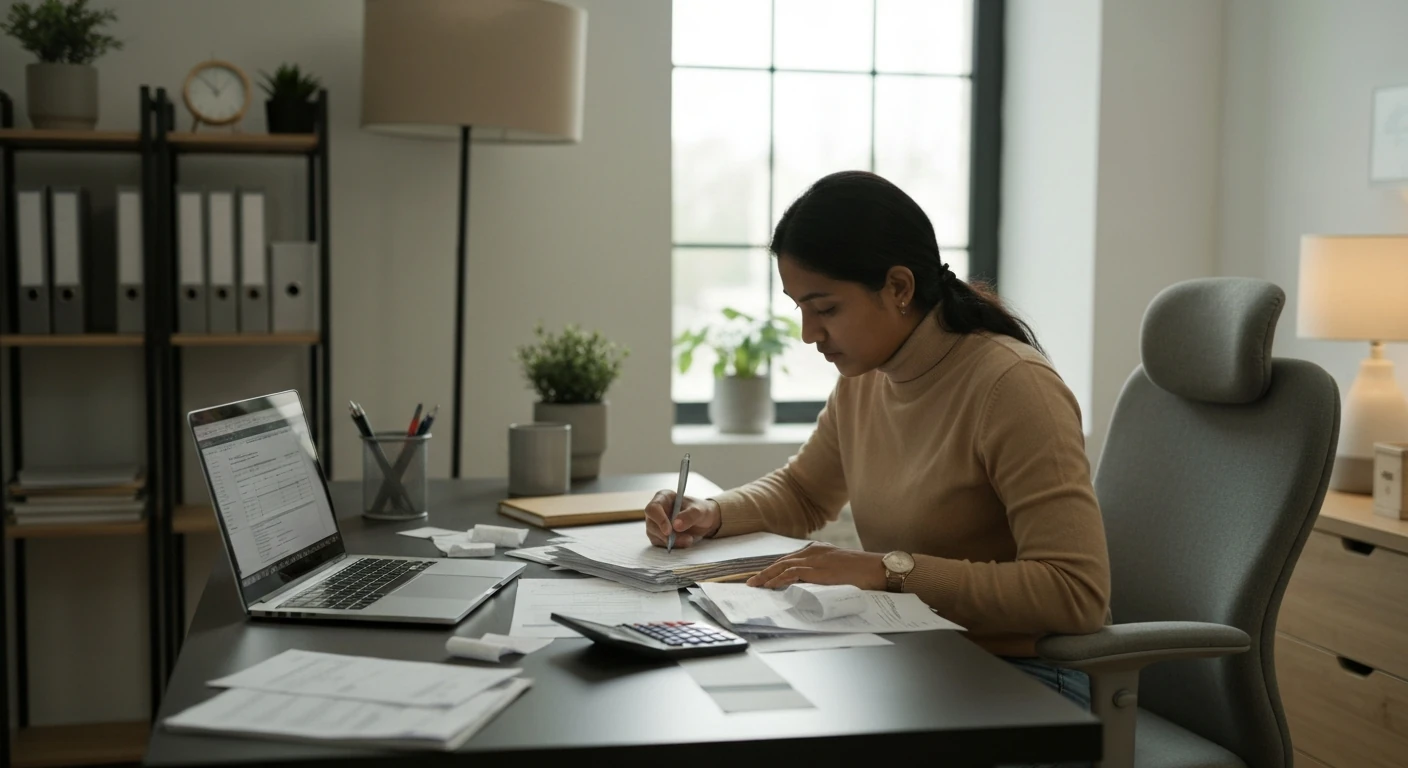
Home Office Tax Deductions Australia 2025: Complete ATO Guide
IntuitiveCalc Team
Financial Content Specialist
With over 4.3 million Australians regularly working from home, understanding how to correctly claim home office deductions has never been more important. This comprehensive guide covers both calculation methods, eligible expenses, and the records you need to keep.
Key Takeaways for 2024-25 Financial Year
- 1. Fixed rate method: Claim 67 cents per hour worked from home (revised from July 2022)
- 2. Actual cost method: Calculate real expenses with detailed records
- 3. Equipment under $300: Claim immediate deduction for work use percentage
- 4. Records required: Must keep time log of hours worked from home
Understanding the Two Methods
The ATO provides two methods for claiming home office running expenses: the fixed rate method and the actual cost method. You can choose whichever method gives you the higher deduction, but you cannot mix and match components from both methods in the same tax return.
Fixed Rate Method
67c/hour
Simple calculation, fewer records needed. Best for occasional or hybrid workers.
Actual Cost Method
Varies
Calculate real costs. More records required but potentially higher deduction.
Method 1: Fixed Rate Method (67 cents per hour)
The revised fixed rate method is the simplest way to claim home office expenses. For each hour you work from home, you can claim 67 cents without needing to calculate individual expenses for electricity, internet, phone, and stationery.
What's Included in the 67 Cents
- ✓ Electricity and gas for heating, cooling, and lighting
- ✓ Home and mobile phone expenses
- ✓ Home internet expenses
- ✓ Stationery and computer consumables (paper, ink, pens)
What You Can Claim SEPARATELY (On Top of 67c)
- + Depreciation of assets: Computer, laptop, monitor, desk, chair (work portion)
- + Repairs and maintenance: Costs for dedicated work equipment
- + Cleaning: If you have a dedicated home office area
Fixed Rate Calculation Example
Example: Sarah - Hybrid Worker (3 days WFH)
| Hours worked from home per week | 24 hours |
| Weeks worked per year | 48 weeks |
| Total hours WFH | 1,152 hours |
| Fixed rate claim (1,152 x $0.67) | $771.84 |
| Plus: Laptop depreciation ($2,000 x 25% x 80% work use) | $400.00 |
| Plus: Office chair ($350 x 100% work use - under $300 threshold after adjustment) | $350.00 |
| Total Home Office Deduction | $1,521.84 |
Record-Keeping Requirements for Fixed Rate
Important: You Must Keep These Records
- Time log: Record of ALL hours worked from home throughout the year (diary, timesheet, roster, or app)
- One bill: At least one phone and one internet bill to prove you incur these costs
- Receipts: For any assets claimed separately (computer, desk, chair)
Note: You can NO longer use a 4-week representative diary to estimate the whole year. You must track actual hours throughout the entire year.
Method 2: Actual Cost Method
The actual cost method requires more record-keeping but may give you a larger deduction if you have high running costs or work from home full-time. You calculate the work-related portion of each expense individually.
Categories of Actual Expenses
Running Expenses
- Electricity (work % of total bill)
- Gas (heating/cooling portion)
- Phone (work % of usage)
- Internet (work % based on usage)
- Stationery and consumables
Depreciating Assets
- Computer/laptop (work portion)
- Office furniture (desk, chair)
- Monitor, keyboard, mouse
- Printer, scanner
- Webcam, headset, microphone
Occupancy Expenses*
- Rent or mortgage interest
- Council rates
- Home and contents insurance
- Land taxes
*Only if dedicated home office with area method
Other Deductible Costs
- Cleaning (dedicated office area)
- Repairs to office equipment
- Curtains/blinds (work area only)
- Work-related subscriptions
Calculating Work-Related Portion
For shared expenses, you must calculate the work-related portion. The ATO accepts reasonable apportionment methods:
| Expense | Calculation Method | Example |
|---|---|---|
| Electricity | (Office area / Home area) x (Work hours / Total hours at home) | 10m2/100m2 x 8hrs/16hrs = 5% |
| Phone | 4-week diary of work vs personal calls | 60% work calls = 60% deductible |
| Internet | Reasonable estimate based on work usage | WFH 3 days = ~40-50% reasonable |
| Computer | Depreciation x work use % | $500 depreciation x 80% = $400 |
Actual Cost Calculation Example
Example: Michael - Full-Time WFH Employee
| Expense | Annual Cost | Work % | Deduction |
|---|---|---|---|
| Electricity | $2,400 | 25% | $600.00 |
| Internet | $1,200 | 60% | $720.00 |
| Mobile phone | $960 | 70% | $672.00 |
| Laptop depreciation ($2,400 / 4 years) | $600 | 90% | $540.00 |
| Monitor depreciation ($800 / 5 years) | $160 | 100% | $160.00 |
| Desk & chair depreciation | $150 | 100% | $150.00 |
| Stationery & consumables | $200 | 100% | $200.00 |
| Total Home Office Deduction | $3,042.00 | ||
Equipment Deductions: The $300 Threshold Rule
Equipment purchases have special rules depending on their cost:
Items $300 or Less
Claim immediate deduction for work-use percentage
- Keyboard: $150 x 90% = $135
- Webcam: $120 x 100% = $120
- Mouse: $80 x 90% = $72
- Headset: $200 x 100% = $200
Items Over $300
Must depreciate over effective life
- Laptop: 4 years (25% per year)
- Desktop: 4 years (25% per year)
- Monitor: 5 years (20% per year)
- Desk/Chair: 10 years (10% per year)
Equipment Depreciation Table
| Asset | Effective Life | Prime Cost Rate | Diminishing Value Rate |
|---|---|---|---|
| Laptop/Desktop Computer | 4 years | 25% | 50% |
| Computer Monitor | 5 years | 20% | 40% |
| Printer/Scanner | 5 years | 20% | 40% |
| Office Desk | 10 years | 10% | 20% |
| Office Chair | 10 years | 10% | 20% |
| Mobile Phone | 3 years | 33.33% | 66.67% |
Dedicated Home Office: Claiming Occupancy Expenses
If you have a room used exclusively for work (not a spare bedroom with a desk, but a genuine dedicated office), you may also claim occupancy expenses. However, this has significant implications:
Warning: CGT Implications
If you claim occupancy expenses (rent, mortgage interest, rates), you may lose part of your main residence CGT exemption when you sell your home. The ATO will calculate the proportion of your home used for business and apply CGT to that portion. This can result in a significant tax bill on sale.
Recommendation: Unless you're running a business from home, most employees should NOT claim occupancy expenses. Stick to running expenses and equipment depreciation.
Which Method Should You Choose?
Decision Guide
Choose Fixed Rate (67c/hour) if:
- You work from home 1-3 days per week (hybrid)
- You don't have a dedicated home office
- You want simpler record-keeping
- Your running costs are average
Choose Actual Expenses if:
- You work from home 4-5 days per week (full-time WFH)
- You have high electricity/gas costs
- You have a dedicated home office (may claim occupancy)
- You can maintain detailed records
Comparison: Fixed Rate vs Actual Cost
| Scenario | Fixed Rate | Actual Cost | Better Method |
|---|---|---|---|
| Hybrid (1,000 hrs/year) | $670 + assets | ~$500 + assets | Fixed Rate |
| Full-time WFH (1,800 hrs/year) | $1,206 + assets | ~$1,800 + assets | Actual Cost |
| High electricity (solar, AC) | $670 + assets | ~$900 + assets | Actual Cost |
What You CANNOT Claim
Non-Deductible Home Office Costs
- x Coffee, tea, snacks, or meals while working from home
- x Childcare costs (even if needed to work from home)
- x 100% of phone/internet bills (only work portion is deductible)
- x Occupancy costs without a dedicated, exclusive home office
- x Items provided or reimbursed by your employer
- x General home maintenance or repairs (unless directly to office)
- x Mortgage principal repayments (interest only may be claimable)
ATO Audit Focus Areas
The ATO has indicated that work-from-home claims are a key audit focus area. Avoid these common mistakes:
Common Audit Triggers
- No time records: Claiming hours without documented evidence
- 100% work use: Claiming entire cost of equipment used for personal purposes
- Double-dipping: Claiming 67c rate AND separate internet/phone expenses
- Occupancy without dedication: Claiming rent/rates without exclusive office
- Inconsistent with employer: Claims don't match employer's WFH records
- Round numbers: Estimates like "$500 phone" suggest no actual records
Related Resources
Income Tax Calculator
See how home office deductions reduce your tax payable
Depreciation Calculator
Calculate equipment depreciation deductions
Electricity Cost Calculator
Estimate electricity costs for actual expenses method
Tax Deductions by Profession
Industry-specific deduction guides
Disclaimer
This guide provides general information only and does not constitute tax, legal, or financial advice. Tax laws change regularly, and individual circumstances vary. For advice specific to your situation, consult a registered tax agent or accountant. Information is current as of January 2025 for the 2024-25 financial year.
IntuitiveCalc Team
Helping Australians maximize their tax deductions with free, accurate calculators and guides.