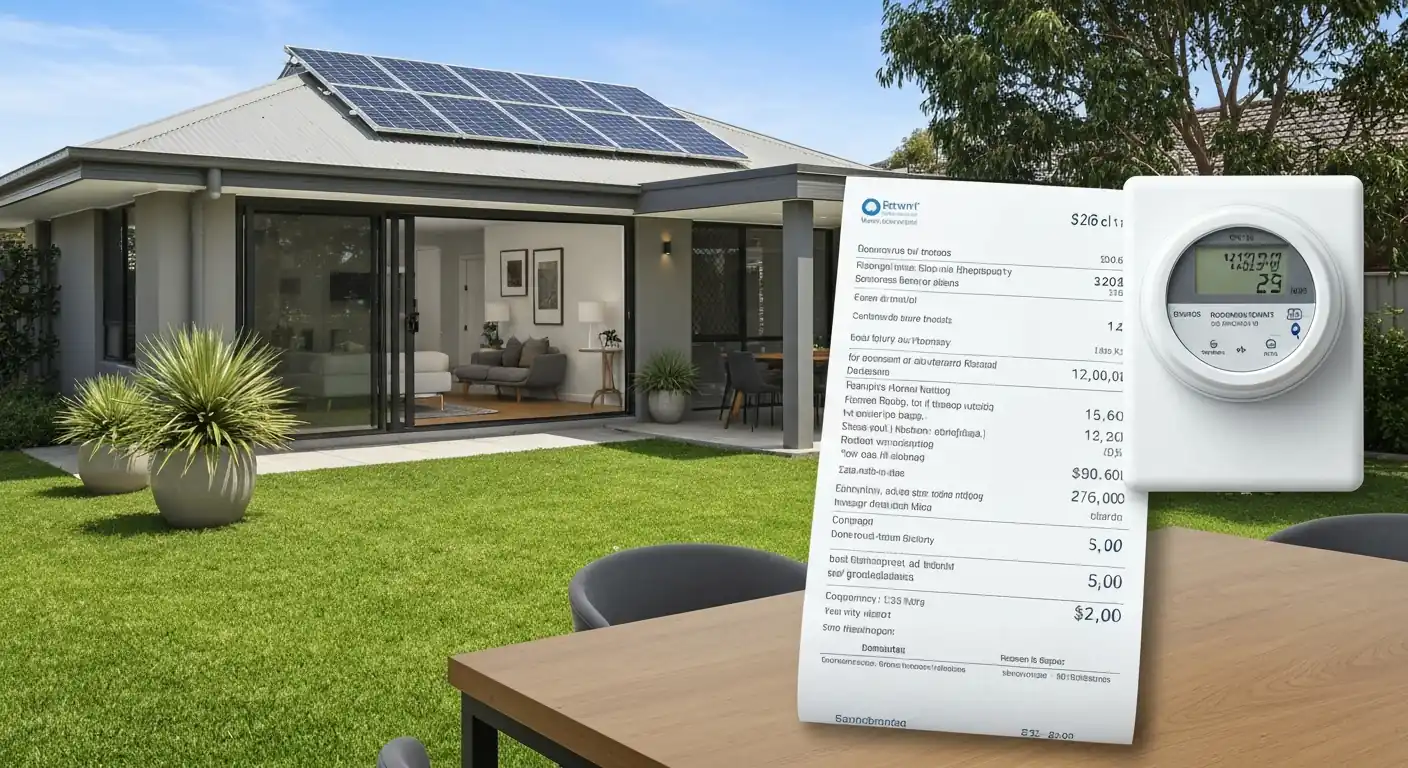
Electricity Bill Reduction Guide 2025: Beat Rising Power Prices
IntuitiveCalc Team
Financial Content Specialist
Electricity prices continue to rise in 2025, but smart Australians are fighting back. Learn exactly where your power goes and how to slash your bills.
Australian Electricity: The Numbers
$1,800-2,500
Average annual bill
40%
Goes to heating/cooling
$200-500
Potential annual savings
Understanding Your Electricity Bill
Before you can reduce your electricity costs, you need to understand where the money goes. Your bill consists of two main charges:
- Usage charges (c/kWh): What you pay per kilowatt-hour of electricity used
- Daily supply charge: A fixed fee just for being connected (usually $1-1.50/day)
Use our Electricity Bill Calculator to identify exactly which appliances are consuming the most power in your home.
State-by-State Electricity Rates (2025)
| State | Average Rate (c/kWh) | Daily Supply | Cost Level |
|---|---|---|---|
| South Australia | 38c | $1.35 | Highest |
| New South Wales | 32c | $1.10 | High |
| Queensland | 28c | $1.00 | Medium |
| Victoria | 27c | $1.05 | Medium |
| Western Australia | 25c | $1.08 | Lower |
| Tasmania | 23c | $0.95 | Lowest |
Where Does Your Electricity Go?
Understanding your home's energy breakdown is the first step to cutting costs. Here's the typical Australian household breakdown:
Heating & Cooling
40%Air conditioning, heaters, fans. The biggest opportunity for savings.
Hot Water
25%Electric hot water systems. Consider heat pump or solar alternatives.
Appliances
20%Fridges, washing machines, dishwashers, dryers, TVs, computers.
Lighting
10%LED vs traditional bulbs makes a massive difference here.
Quick Wins: No-Cost Electricity Savings
These changes cost nothing but can save $100-300 per year:
Free Changes That Save Money
- 1 Set AC to 24°C (cool) / 18-20°C (heat): Each degree saves ~10% on heating/cooling
- 2 Wash clothes in cold water: Heating uses 80-90% of washing machine energy
- 3 Turn off standby power: "Vampire" appliances cost $100+/year
- 4 Only run dishwasher when full: Half loads waste water AND electricity
- 5 Close doors between rooms: Don't heat/cool unused spaces
- 6 Set fridge to 3-4°C, freezer to -18°C: Colder than needed wastes energy
The Biggest Energy Vampires in Your Home
Standby power (phantom load) is electricity used by devices when they're "off" but still plugged in. Here are the worst offenders:
| Appliance | Standby Power | Annual Cost | Solution |
|---|---|---|---|
| Gaming Console | 12-25W | $35-75 | Enable power saving mode |
| Set-top Box / Foxtel | 15-30W | $45-90 | Switch off at wall overnight |
| Desktop Computer | 3-10W | $9-30 | Use power strip switch |
| Smart TV | 1-5W | $3-15 | Disable "quick start" |
| Microwave (clock) | 2-3W | $6-9 | Minimal—clock is useful |
| Phone Chargers | 0.1-0.5W | $0.30-1.50 | Negligible—don't worry |
Based on 30c/kWh rate, 24/7 standby
Medium-Investment Upgrades ($50-500)
LED Lighting Upgrade
Replacing all incandescent or halogen bulbs with LEDs is one of the best returns on investment:
LED vs Incandescent Comparison
60W Incandescent Bulb
- Power: 60W
- 5 hours/day = 110 kWh/year
- Cost: ~$33/year
- Lifespan: 1,000 hours
10W LED Equivalent
- Power: 10W (same brightness)
- 5 hours/day = 18 kWh/year
- Cost: ~$5.50/year
- Lifespan: 25,000 hours
Savings: $27.50/bulb/year (paid back in months!)
Smart Power Strips
A $30-50 smart power strip automatically cuts power to devices when your TV or computer turns off, eliminating standby drain from connected devices like game consoles, speakers, and set-top boxes. Typical payback: 6-12 months.
Ceiling Fans
A ceiling fan uses just 15-75W compared to 1,500-3,000W for a split system AC. In moderate heat, fans can replace AC entirely. In extreme heat, fans let you set AC 3-4°C higher while feeling just as cool. Annual savings: $150-300.
High-Investment Upgrades ($1,000+)
Solar Panels
Solar panels can reduce electricity bills by 50-80% and even generate income through feed-in tariffs. Use our Solar ROI Calculator to see if solar makes sense for your home.
Typical Solar System Economics (6.6kW)
Upfront Cost
$5,000-8,000
(after STCs rebate)
Annual Savings
$1,200-1,800
(bill reduction + feed-in)
Payback Period
3-5 years
System Lifespan
25+ years
Heat Pump Hot Water
Electric storage hot water systems are expensive to run. A heat pump extracts heat from the air (like a reverse fridge) and uses 65-75% less energy. Government rebates of $1,000+ are often available.
High-Efficiency Split System AC
If your AC is 10+ years old, replacing it with a modern inverter unit can cut cooling costs by 30-50%. Look for 5+ star energy ratings and consider reverse-cycle for heating efficiency too.
Compare and Switch Providers
In 2025, 34% of Australians switched electricity providers—up 4% from the previous year. Here's how to join them:
Provider Comparison Checklist
- Use Energy Made Easy (government comparison site) for unbiased quotes
- Compare total cost, not just per-kWh rates (supply charges matter!)
- Check for solar feed-in rates if you have panels
- Look for no lock-in contracts for flexibility
- Consider time-of-use tariffs if you can shift usage to off-peak
Time-of-Use Tariffs: When You Use Matters
If you're on a time-of-use tariff, you pay different rates depending on when you use electricity:
| Period | Typical Times | Typical Rate |
|---|---|---|
| Peak | 2pm-8pm weekdays | 45-55c/kWh |
| Shoulder | 7am-2pm, 8pm-10pm | 25-35c/kWh |
| Off-Peak | 10pm-7am, weekends | 15-22c/kWh |
Shift Usage to Save
- Dishwasher: Run overnight using delay start
- Washing machine: Use delay to finish by morning
- Pool pump: Timer set to off-peak hours only
- Electric vehicle: Charge overnight
- Hot water boost: Off-peak only if possible
Government Rebates and Assistance
Available Assistance Programs
- $ Energy Bill Relief Fund: Federal government rebates applied directly to bills
- $ State Concessions: Low-income households may qualify for ongoing discounts
- $ Solar Rebates (STCs): Reduce upfront cost of solar panels significantly
- $ Hot Water Rebates: Up to $1,000+ for heat pump installation
- $ Battery Rebates: State-specific programs for home battery storage
Your Electricity Reduction Action Plan
Week-by-Week Plan
Week 1: Audit
Use our Electricity Calculator to identify your biggest energy users.
Week 2: Quick Wins
Implement free changes: adjust AC, switch to cold wash, kill standby power.
Week 3: Compare Providers
Get quotes using Energy Made Easy. Switch if savings exceed $100/year.
Month 2-3: Invest
Replace remaining incandescent bulbs. Consider solar quotes.
Final Thoughts
Electricity costs don't have to be out of control. By understanding where your power goes, implementing free behavioural changes, and making smart investments, you can cut your bills by $200-500 per year or more.
Start with our Electricity Bill Calculator to identify your biggest opportunities, then work through this guide systematically. The savings compound over time, both in your pocket and for the environment.
Related Calculators
IntuitiveCalc Team
Helping Australians reduce costs and make smarter energy decisions.